Of every question I get about engagement sessions, "what should we wear" comes up a lot. But the decision that actually changes the photos more than anything else is one couples rarely think to ask about: when we shoot.
What Golden Hour Actually Is
Golden hour is the stretch of time (usually 60 to 90 minutes) right after sunrise or before sunset, when the sun sits low enough that its light turns warm, soft, and directional instead of harsh and overhead. It's not a filter and it's not editing. It's just physics, and it happens whether or not you plan for it.
How It Changes the Mood
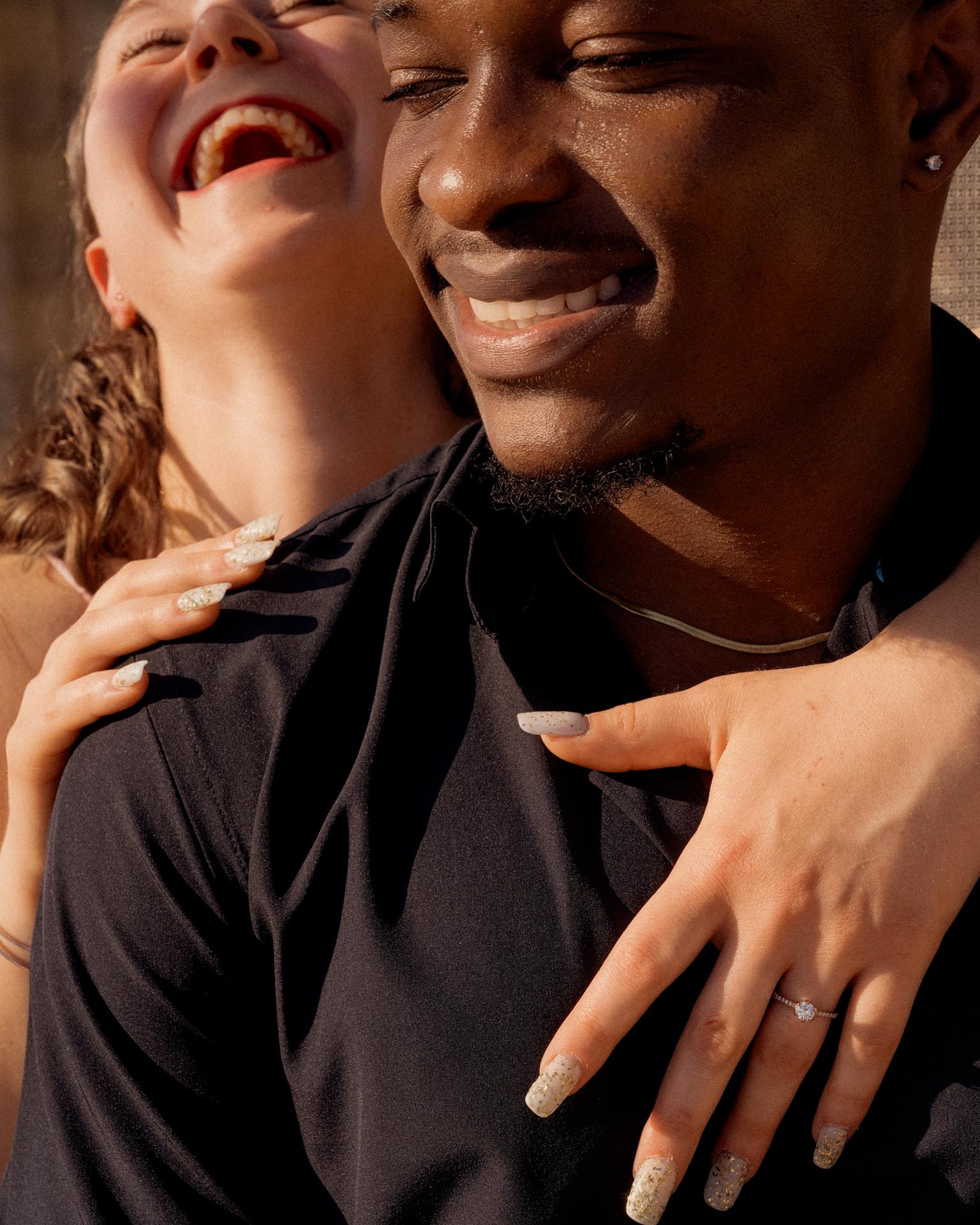
Midday sun creates hard shadows under the eyes and a flat, uniform look. Golden hour does the opposite: it wraps around faces, adds a natural glow to skin, and creates the kind of backlit, slightly hazy depth that makes a photo feel cinematic instead of just documented. Editorially, it's the difference between a photo that looks nice and one that looks like it belongs somewhere.
You can't recreate golden hour in editing. You can only plan for it, or miss it.
Planning Around It
For a full 2-hour session, I usually build the shoot so the second half lands right in golden hour, which gives us time for more structured shots first and then lets the light do the heavy lifting as the sun drops. Location matters here too. Open fields, tree lines, and west-facing streets all catch the light differently, so where we shoot and when we shoot are really the same decision.
What If Golden Hour Isn't an Option
Sometimes schedules don't allow for it, and that's fine. Overcast days actually give soft, even light all day long, which is its own kind of forgiving. What I try to avoid is the harsh, straight-overhead sun of a clear midday, which is the one lighting condition that fights us instead of helping.